

Why Early Detection Changes Everything
Oral cancer is more common than many patients realize, and it does not always announce itself with obvious symptoms. Thousands of new cases are diagnosed across the country each year, and the outcome often comes down to how early the disease is caught. At Crowley Family Dental in Sandusky, an oral cancer screening is included as a standard part of every comprehensive exam, not an add-on service patients have to request separately.
The screening itself takes only a few minutes, but the value it offers can be significant. Many of the warning signs of oral cancer, including certain lesions, sores, and patches of discolored tissue, can be present long before a patient notices any pain or discomfort. Catching those changes early gives patients access to treatment options that are far less invasive than what may be needed if the disease progresses undetected.
Schedule an Exam & ScreeningWhat the Screening Looks For
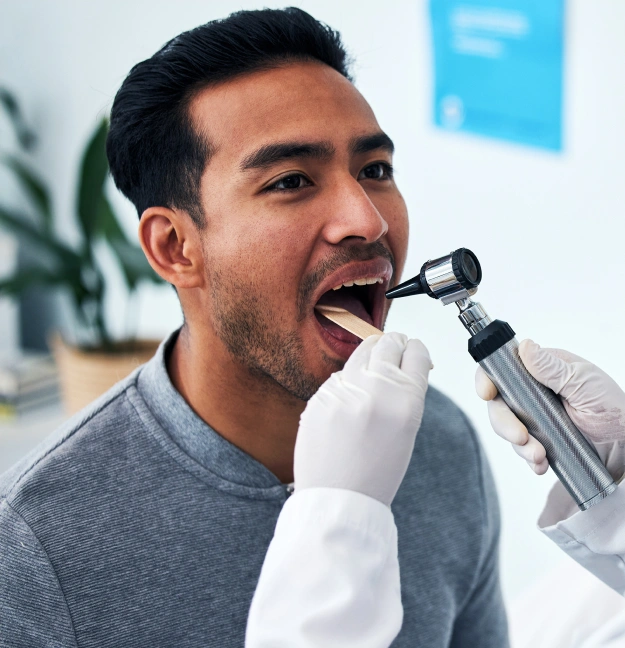
During a screening, the exam focuses on identifying anything unusual in the soft tissue of the mouth. This includes sores that have not healed, red or white patches, and any lumps or areas of thickened tissue that feel different from the surrounding area. The dentist examines the tongue, cheeks, gums, and throat, and performs a hands-on check of the tissue to feel for irregularities that are not always visible.
Patients who wear dentures or partials are asked to remove them during the screening, so the full surface of the gums and supporting tissue can be properly examined.
Understanding Risk Factors
A number of lifestyle factors are known to increase the likelihood of developing oral cancer, which is part of why screenings matter for patients across a wide range of ages and backgrounds.
- Regular tobacco use, including cigarettes, cigars, and chewing tobacco
- Heavy or frequent alcohol consumption
- Extended sun exposure without protection, which raises the risk of lip cancer specifically
- A combination of tobacco and alcohol use, which compounds risk beyond either factor alone
What Happens if Something Looks Unusual
Finding something during a screening does not automatically mean a cancer diagnosis, and most unusual findings turn out to be harmless.
A closer visual and physical check: Any area of concern is examined more thoroughly to assess its size, texture, and appearance.
A period of monitoring, when appropriate: Certain lesions, such as those caused by herpes simplex or aphthous ulcers, tend to resolve on their own within about two weeks, so a short observation period is sometimes the right first step.
A follow-up recheck: If an area has not resolved or changed within that window, it is reassessed to determine the next course of action.
A tissue sample, if needed: In some cases, a small sample of tissue is taken for further examination to rule out or confirm a diagnosis.
A specialist referral, when warranted: If further evaluation is needed beyond what can be assessed in office, a referral to an oral surgeon or specialist is made promptly.
Lesions That Can Mimic Oral Cancer
Not every sore or discoloration in the mouth is cause for alarm. Certain common conditions, including cold sores caused by herpes simplex and canker sores known as aphthous ulcerations, can closely resemble the early signs of oral cancer without being related to it at all. These typically clear up within about two weeks on their own. This is part of why a short monitoring period is often the first step rather than immediate intervention, allowing harmless lesions time to resolve naturally while still keeping a close eye on anything that persists.
Make Screenings Part of Your Routine Care
Oral cancer screenings are already included with every exam at Crowley Family Dental, so there is no extra step needed beyond keeping up with your regular visits. Schedule your next appointment and let early detection work in your favor.
Book Your AppointmentFrequently Asked Questions About Oral Cancer Screenings
Yes. Every comprehensive exam at our Sandusky office includes an oral cancer screening, with no additional steps required from the patient.
No. The screening is painless and involves a visual check along with a brief, gentle physical exam of the soft tissue in the mouth.
The screening typically adds only a few minutes to a standard exam, making it an easy and efficient way to monitor oral health at every visit.
Common signs include sores that do not heal, red or white patches in the mouth, unexplained lumps, or areas of tissue that feel different from the surrounding gum or cheek.
Yes. Patients who wear dentures or partials are asked to remove them so the full surface of the gums and tissue underneath can be properly examined.
Depending on what is found, the next step may involve a short monitoring period, a follow-up recheck, a tissue sample, or a referral to a specialist for further evaluation.
Yes. Certain common lesions, including cold sores and canker sores, can resemble early warning signs but typically resolve within about two weeks on their own.
Tobacco use, heavy alcohol consumption, and prolonged sun exposure are among the most significant risk factors, though screenings remain important for all patients regardless of risk level.