

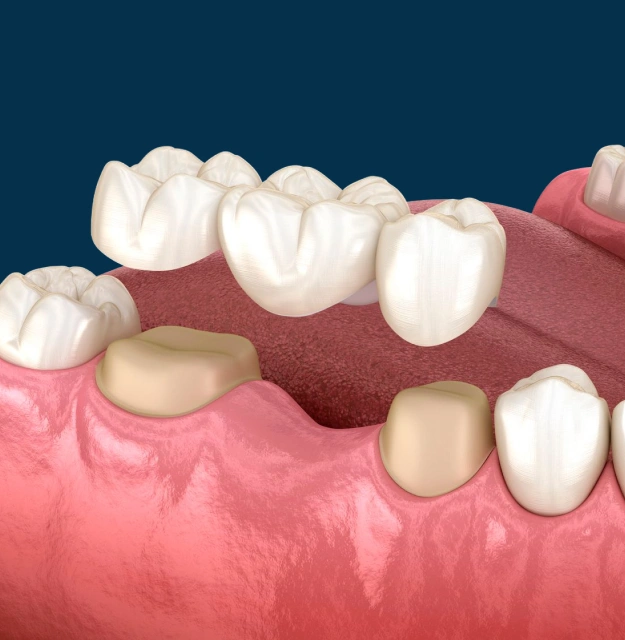
Fill the Gap with a Permanent Solution
When a tooth is lost, the space it leaves behind rarely stays empty without consequence. Neighboring teeth can gradually drift toward the gap, biting force shifts unevenly onto the remaining teeth, and the longer the space sits untreated, the more it can affect the overall balance of your bite. At Crowley Family Dental in Sandusky, a dental bridge offers a fixed way to close that gap, anchoring a custom-made replacement tooth securely in place using the teeth or dental implants on either side for support.
Unlike a removable option, a bridge stays in place permanently once fitted, functioning much like a natural tooth for everyday chewing and speaking. The replacement tooth, called a pontic, is custom shaped and shaded to blend with the surrounding smile, while the teeth on either side of the gap, or a dental implant, provide the structure needed to hold everything securely in place.
Ask About Dental BridgesHow a Bridge Restores Function and Appearance
Replacing a missing tooth with a bridge addresses more than a cosmetic gap, restoring several practical functions that are easy to overlook until a tooth is actually missing.
- Restores even chewing pressure across the bite, reducing strain on remaining teeth
- Helps prevent neighboring teeth from shifting or tilting into the open space
- Maintains the natural shape of the face and jaw by keeping teeth properly supported
- Improves speech that can be affected by gaps, particularly toward the front of the mouth
- Blends naturally with surrounding teeth in color and shape for a seamless appearance
A bridge is fixed in place rather than removable, meaning it functions and feels closer to a natural tooth than options that come in and out throughout the day.
Who Benefits Most From a Dental Bridge
A bridge tends to work well for patients missing one or a few consecutive teeth, particularly when the teeth on either side of the gap are healthy enough to support a crown. Patients who are not good candidates for or do not prefer a removable option, such as a partial denture, often find a bridge to be a more comfortable, lower-maintenance alternative that does not require daily removal.
Good bone support and healthy surrounding teeth or a well-integrated dental implant are important factors in determining whether a bridge is the right fit. An exam at our Sandusky office helps confirm whether the teeth adjacent to the gap can properly support a bridge, or whether an implant-supported bridge may be a better option for the specific case.
What Getting a Dental Bridge Involves
A dental bridge is typically completed over a couple of visits, allowing time for a precise, custom fit that functions comfortably for years to come. Here is what that process generally looks like.
An initial evaluation: The gap and surrounding teeth are examined to confirm a bridge is the right option and to determine whether natural teeth or an implant will provide support.
Preparing the supporting teeth: If natural teeth are being used for support, they are reshaped slightly to accommodate the crowns that will anchor the bridge in place.
Taking a precise impression: An impression or digital scan captures the exact shape of the prepared teeth and gap, used to custom design the bridge.
A temporary bridge, when needed: While the permanent bridge is being fabricated, a temporary may be placed to protect the prepared teeth and maintain a natural appearance.
Fitting the permanent bridge: Once ready, the custom bridge is checked carefully for fit, bite, and appearance before being permanently secured in place.
Final adjustments and bonding: Any final adjustments are made to ensure the bridge feels comfortable, and it is then bonded securely so it functions like the rest of your natural teeth.
Caring for a Dental Bridge
A bridge is cared for much like natural teeth, with a few added details to protect both the restoration and the teeth supporting it. Brushing twice daily and flossing carefully around the bridge, including underneath the pontic where a floss threader or water flosser can help, keeps the area clean and free of the buildup that could otherwise affect the supporting teeth.
Routine cleanings and exams allow our Sandusky team to check that the bridge remains securely fitted and that the surrounding gum tissue stays healthy. Avoiding excessive pressure from chewing ice or hard foods also helps protect the bridge from unnecessary wear, allowing it to function reliably for many years with consistent care.
Restore Your Bite with a Fixed, Custom Bridge
If a missing tooth has been affecting how you chew, speak, or feel about your smile, a dental bridge offers a permanent way to close that gap. Schedule a consultation to see if a bridge is the right fit for you.
Book Your AppointmentFrequently Asked Questions About Dental Bridges
A bridge typically replaces one or a few consecutive missing teeth, using the surrounding teeth or a dental implant for support depending on the case.
The teeth are numbed during preparation, so the process is generally comfortable, similar to what patients experience when getting a crown.
With proper care, a dental bridge often lasts a decade or more, though its lifespan depends on oral hygiene and the health of the supporting teeth.
Yes. An implant-supported bridge is an option when the teeth adjacent to the gap are not suitable to support a traditional bridge.
No. A bridge is a fixed restoration that stays in place permanently, unlike a partial denture, which can be taken out for cleaning.
Yes. The replacement tooth is custom shaped and shade matched to blend in with your surrounding natural teeth for a seamless appearance.
A floss threader or water flosser is typically used to clean beneath the pontic, an area that our Sandusky team can walk you through during your fitting.
Patients missing one or a few consecutive teeth, with healthy supporting teeth or a suitable implant, are generally good candidates. An exam at our Sandusky office helps confirm the best option for your specific case.